The Grandma Network: How Asian Immigrant Families Kept ABBA's Flame Burning When the Rest of America Moved On

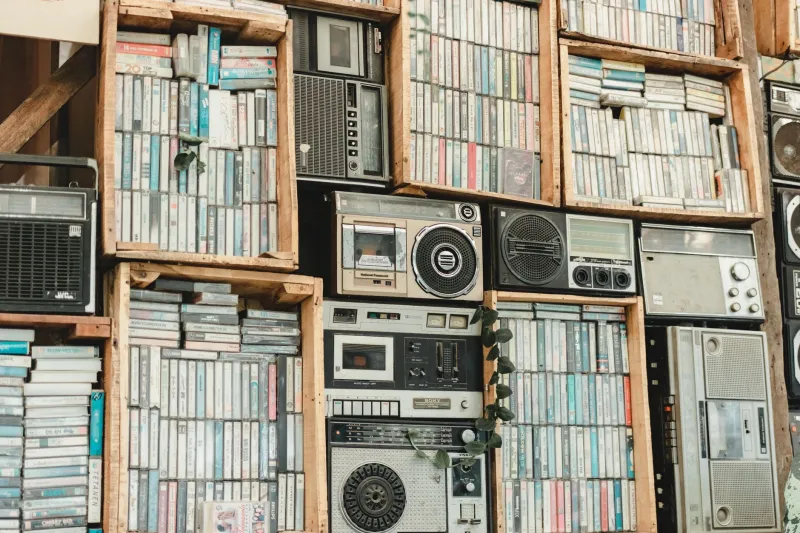
Somewhere in a garage in Fremont, California, there's a box of cassette tapes that never made it to the donation pile. Inside: a worn copy of ABBA Gold, a dubbed tape labeled in Cantonese handwriting, and a Greatest Hits collection with a cracked case that's been repaired with packing tape at least twice. The woman who owned them? She's 78 now, and she still knows every word to "The Winner Takes It All."
This isn't a nostalgia piece. It's something closer to a correction.
When music journalists talk about the ABBA revival — and they've been talking about it nonstop since Voyage dropped in 2021 — the story almost always goes the same way. ABBA was huge in the 70s, faded into kitsch in the 80s, got rescued by Mamma Mia! in the late 90s, and then Gen Z "rediscovered" them through streaming algorithms and TikTok. Clean arc. Satisfying narrative.
Except it leaves out an entire chapter. A chapter written in Mandarin, Tagalog, Korean, and Vietnamese, playing on repeat in living rooms that mainstream music history never thought to visit.
When America Said Goodbye, Asian Households Said Nothing of the Sort
The disco backlash of the early 1980s was a very particular American cultural phenomenon. Disco Demolition Night at Comiskey Park in 1979 became a kind of symbolic funeral for an era, and American radio followed suit with remarkable speed. By the mid-80s, ABBA had broken up and their music had been largely scrubbed from the playlists that shaped mainstream taste.
But here's the thing about immigrant communities: they don't always get the memo on what's supposed to be uncool. And honestly, why would they?
For families arriving from the Philippines, Hong Kong, South Korea, Vietnam, and mainland China during the late 70s and 80s, ABBA wasn't a disco relic — it was often one of their first and most meaningful points of connection to Western pop music. The melodies were accessible. The production was polished without being alienating. And the emotional directness of songs like "Fernando" and "Chiquitita" translated across language barriers in a way that more lyrically complex artists sometimes didn't.
When the American cultural machine moved on, these families simply... didn't follow. They kept the tapes. They bought the CDs when cassettes became obsolete. They played ABBA at Lunar New Year gatherings, at birthday parties, at Sunday dinners that stretched into the evening.
The Aunties Were the Algorithm
Talk to enough Asian-American ABBA fans — and at Asia ABBA Fan Hub, we've talked to quite a few — and a pattern emerges pretty quickly. Almost nobody in this community describes "discovering" ABBA the way a Gen Z kid might describe stumbling onto them through a Spotify playlist. Instead, the word that comes up over and over is inherited.
"My grandmother had this specific CD player she kept in the kitchen," says one second-generation Korean-American fan from the Chicago suburbs. "It was basically just for ABBA. That was its whole job. I grew up thinking 'Dancing Queen' was a cooking song because I only ever heard it while she was making food."
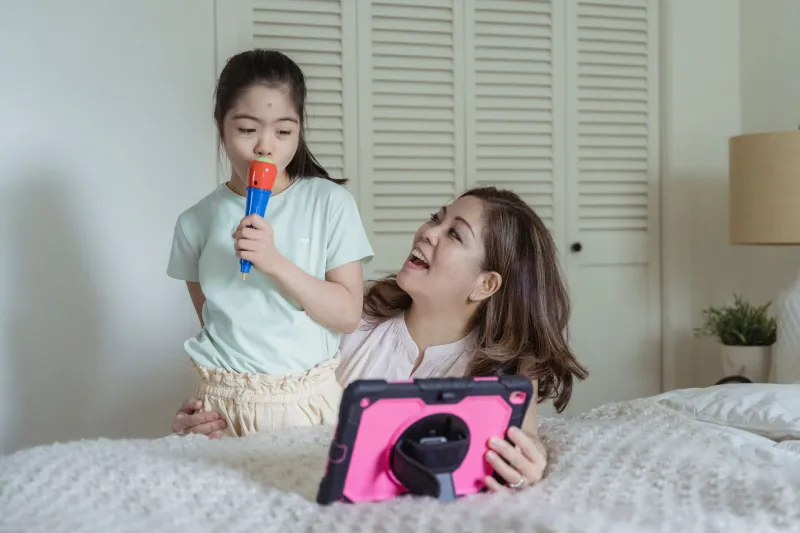
That kind of transmission — grandmother to grandchild, auntie to niece, immigrant parent to American-born kid — created something that functioned almost like an underground network of cultural preservation. Nobody organized it. Nobody made a conscious decision to keep ABBA relevant. It just happened, organically, because the music had embedded itself so deeply into the emotional landscape of these families that abandoning it wasn't really an option.
In a pre-internet era, this was actually a remarkable thing. Without streaming, without social media, without any of the infrastructure we now associate with fandom, Asian immigrant households maintained a living relationship with ABBA's music across decades when the broader American market had essentially filed it away under "retro novelty."
What Mainstream Music History Keeps Getting Wrong
There's a tendency in music journalism to treat ABBA's wilderness years — roughly 1983 to 1999, before Mamma Mia! changed the conversation — as a period of genuine cultural dormancy. The band broke up. The music aged awkwardly. And then, the story goes, a jukebox musical came along and resurrected them.
This framing isn't exactly wrong. But it's incomplete in a way that matters.
Because while critics and tastemakers were busy deciding ABBA was a guilty pleasure at best, there were entire communities in the US where ABBA required absolutely no guilt. Where it was just... music. Good music. Music that meant something.
The Asian immigrant experience of ABBA during those wilderness years wasn't about irony or nostalgia or retro chic. It was about genuine, uninterrupted affection. And that kind of sustained, sincere engagement with an artist's work is actually pretty rare. It's the kind of thing that keeps a legacy alive in ways that critical reassessment can't fully account for.
When researchers and journalists eventually started mapping the demographics of the ABBA revival, they found some surprising data points. ABBA had unusually strong streaming numbers in several Asian markets. Asian-American communities showed disproportionately high engagement with Mamma Mia! productions. The nostalgia wasn't hitting the same way it was for white American audiences who were rediscovering something — for many Asian-American fans, there was nothing to rediscover because they'd never let go in the first place.
The Tastemaker Nobody Credited
Here's the part of the story that deserves more attention: the Asian grandmother who kept ABBA playing in her kitchen was, in a very real sense, doing cultural preservation work. She was maintaining a living archive. She was transmitting taste across generations in a way that would eventually feed into the exact revival that mainstream media is now celebrating.
When Gen Z talks about ABBA feeling "timeless" or "different from other old music," part of what they might be responding to is the fact that for a significant portion of the population, ABBA was timeless — it was never treated as a period piece to begin with.
The grandma network didn't set out to be ahead of the curve. They weren't making a cultural argument. They were just playing music they loved, in homes where that music had always belonged.
But the effect? The effect was that when the broader American culture finally circled back to ABBA — through Voyage, through TikTok, through a thousand think pieces about disco's rehabilitation — there was already a community that had been holding the door open for decades.
What Gets Lost When We Tell the Story Wrong
None of this is to diminish what the current ABBA revival represents. It's genuinely exciting to watch younger generations connect with music that's now over 50 years old. The enthusiasm is real, and it's earned.
But the narrative of ABBA as a rediscovery erases a whole category of fans who never needed to do any rediscovering. It treats Asian immigrant communities as passive recipients of cultural trends rather than as active participants in keeping those trends alive.
The worn cassette tapes in that Fremont garage aren't just memorabilia. They're evidence of something that mainstream music history has been slow to acknowledge: that the most devoted, most durable fandom is often the quietest one. The one that doesn't need a revival because it never stopped believing in the first place.
So next time someone tells you ABBA is back, you might want to ask: back for whom? For a lot of Asian-American families, they never left.