Before K-Dramas and WeChat: How ABBA Became the Unlikely Lifeline for Asian Immigrants in 1970s-80s America
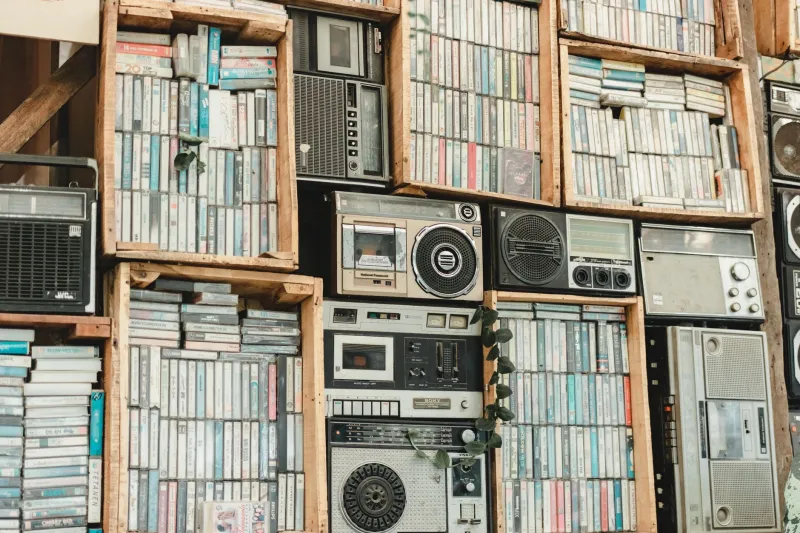
Imagine landing in a country where you don't fully speak the language, the food smells nothing like home, and the closest thing to a familiar face is a neighbor you met once at a community church potluck. Now imagine that, on a beat-up transistor radio sitting on your kitchen counter, four Swedes start singing about a dancing queen, young and sweet, only seventeen — and somehow, impossibly, you feel less alone.
That was the reality for thousands of Asian immigrants who arrived in the United States during the 1970s and 1980s. And for a surprising number of them, ABBA wasn't just background noise. It was a lifeline.
A World Without Ethnic Media
It's easy to forget how isolated early Asian immigrant communities in America actually were. Today, you can pull up a Filipino soap opera on YouTube, stream a Bollywood blockbuster on Amazon Prime, or video call your grandmother in Busan in real time. Back then? None of that existed.
Vietnamese, Korean, Filipino, Indian, and Chinese immigrants arriving in cities like Los Angeles, Houston, and New York were navigating a media landscape that had almost nothing for them. Ethnic newspapers were scarce. International phone calls cost a small fortune. Cassette tapes of music from back home had to be mailed across oceans, and they didn't always make it.
What was everywhere — on the radio, on television variety shows, blasting out of record stores at the mall — was American pop music. And right at the center of that universe, for a good chunk of the late '70s and early '80s, was ABBA.
"We didn't choose ABBA," laughs Linda Nguyen, a retired nurse who immigrated from Saigon to San Jose in 1979. "ABBA chose us. They were just... everywhere. And then one day you realize you know every word to 'Fernando,' and it doesn't feel strange anymore. It feels like yours."
Why ABBA, Specifically?
This is a fair question. Plenty of Western pop was popular during that era — Fleetwood Mac, The Bee Gees, Elton John. So what made ABBA stick so deeply in the immigrant experience?
Part of the answer is linguistic. ABBA's music was written and performed by people for whom English was also a second language. Agnetha and Frida famously learned their English phonetically at first, and the band's Swedish sensibility gave their phrasing a slightly different cadence than native English pop. For listeners who were themselves wrestling with English as a new tongue, there was something oddly relatable about that. The emotion in the voices came through even when the words were still being decoded.
Then there's the thematic content. ABBA's catalog is, at its core, about universal human experiences — love, loss, longing, celebration, family, and the bittersweet passage of time. These weren't themes locked behind cultural specificity. A Korean mother who had left her parents behind in Seoul could hear "The Winner Takes It All" and feel the weight of sacrifice in her chest without needing a cultural translator.
"There's a word in Tagalog, gigil, for that feeling when something is so overwhelming you just want to squeeze it," says Maribel Santos, who came to Chicago from Manila in 1981. "That's what ABBA felt like. Emotionally overwhelming in the best way. And it didn't matter that they were from Sweden. Feelings don't have a passport."
The Cassette Tape as Cultural Artifact
For many first-generation immigrants, ABBA's music became embedded in the rituals of early American life. Weekend grocery runs to the Asian market, long drives to visit relatives in neighboring cities, the quiet Sunday afternoons when homesickness hit hardest — ABBA was the soundtrack to all of it.
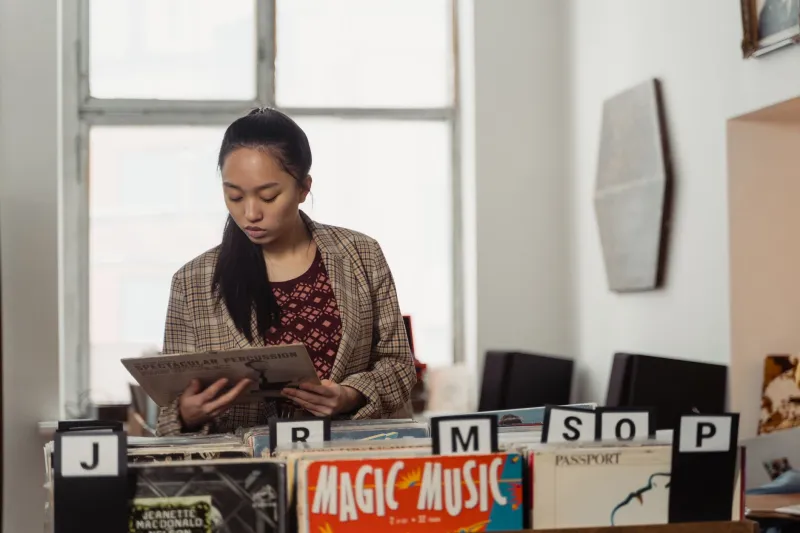
Cassette tapes of Arrival, The Album, and Super Trouper were passed between community members like contraband. Families who couldn't afford full album collections would record songs off the radio onto blank tapes, filling 90-minute cassettes with whatever came through the antenna clearly enough. ABBA's production quality — crisp, polished, and radio-friendly — meant their songs survived the transfer better than most.
James Park, who arrived from South Korea to attend graduate school in Ohio in 1977 and never left, remembers an ABBA tape being one of the first things his wife packed when they moved into their first apartment. "She said it made the empty rooms feel less empty. I thought that was a little dramatic at the time," he says with a grin. "Now I think she was exactly right."
Joy as a Survival Strategy
There's a tendency to romanticize the immigrant experience — to frame it purely as hardship overcome through grit and sacrifice. And while that's true, it's also incomplete. Joy mattered. Celebration mattered. And ABBA, perhaps more than any other Western act of that era, gave immigrant communities permission to just feel good.
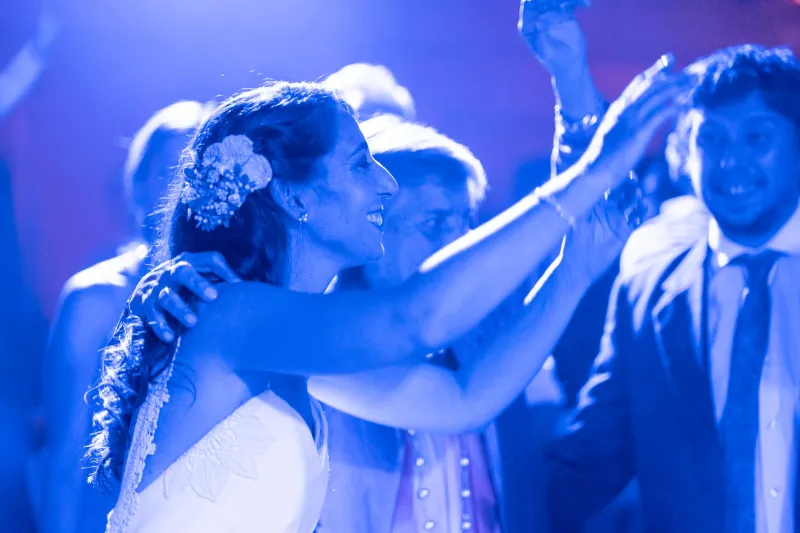
"Dancing Queen" in particular became a staple at community gatherings — Filipino fiestas, Korean church socials, Indian cultural association dances. The song's infectious energy didn't require explanation or translation. You just moved. And in moving together, people who had crossed oceans and left entire lives behind found a moment of pure, uncomplicated happiness.
Social scientists who study immigrant acculturation talk about the importance of what they call "emotional anchors" — cultural touchstones that provide psychological stability during periods of intense upheaval. For many Asian immigrants of that era, ABBA functioned as exactly that. Not as a replacement for their own culture, but as a bridge — something warm and accessible on the American side of the divide while they worked to build their own communities from scratch.
The Legacy Lives in the Living Room
What makes this history especially resonant for the Asian-American community today is how it was passed down. The children and grandchildren of these first-generation immigrants grew up with ABBA already in the house — on the radio, on those worn cassette tapes, hummed by parents doing dishes or folding laundry.
For many second-generation Asian-Americans, ABBA isn't a retro discovery or a nostalgia trip. It's an inheritance. A piece of their parents' story that got woven into their own before they were old enough to know what any of it meant.
"My mom used to sing 'Chiquitita' when she was sad," says Michelle Tran, a 34-year-old graphic designer in Houston whose family came from Vietnam. "I didn't know what the words meant as a kid. I just knew that song meant something real was happening. Now when I hear it, I think of her. I think of everything she went through to get us here."
That's not a small thing. That's exactly what music is supposed to do.
More Than a Pop Group
The story of ABBA and the Asian immigrant experience is, in the end, a story about how culture travels in unexpected directions. Nobody planned it. ABBA didn't write their music for a Vietnamese refugee or a Korean grad student or a Filipino nurse starting over in a new country. But that's the thing about great art — it finds its audience regardless of the route it has to take.
Here at Asia ABBA Fan Hub, we talk a lot about how ABBA's music resonates across Asian communities. But sometimes the most important version of that story isn't about resonance. It's about rescue. For a generation of immigrants who arrived in America with almost nothing but their courage and their longing, four Swedes from Stockholm offered something nobody else was offering at that moment: a feeling of being seen, of being included, of belonging somewhere — even if that somewhere was just a song.
And honestly? That's enough. That's everything.