Disco Rebellion: Why Asian-American Gen Z Is Ditching the Algorithm for ABBA
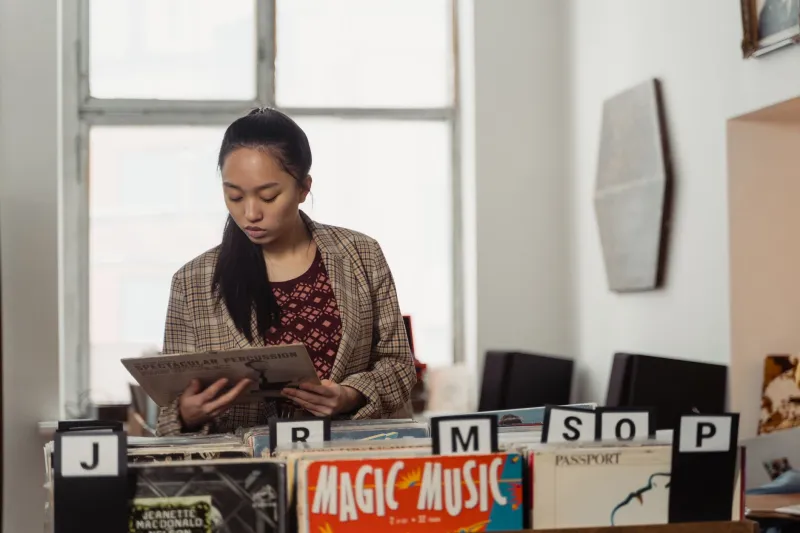
There's a moment that 22-year-old Mei-Lin Chen from Los Angeles describes as a turning point. She was scrolling through her Spotify Discover Weekly — for the third time that week, finding nothing that stuck — when her mom played The Winner Takes It All from the kitchen. Mei-Lin stopped scrolling. She didn't pick her phone back up for an hour.
"It felt like the song was actually about something," she says. "Not just a vibe. An actual feeling."
Mei-Lin isn't alone. Across the US, a quiet but unmistakable shift is happening among Asian-American Gen Z listeners. Rather than chasing whatever sound TikTok's algorithm decided was trending this Tuesday, a growing number of young fans are reaching backward — all the way to Benny, Björn, Agnetha, and Anni-Frid — and finding something that the feed just can't manufacture.
The Algorithm Fatigue Is Real
Let's be honest about what streaming platforms have done to music discovery. The recommendation engine is brilliant at giving you more of what you already like, but it's terrible at surprise. Music therapist Dr. James Okafor, who works with young adults in the Bay Area, puts it bluntly: "When every song is pre-selected to match your mood profile, you lose the experience of being genuinely moved by something unexpected. That's a real psychological loss."
For Asian-American Gen Z specifically, that loss carries extra weight. Many of these young listeners grew up navigating dual cultural identities — balancing the expectations of heritage with the pressures of American pop culture assimilation. The algorithm, which flattens everything into engagement metrics, doesn't have a category for that complexity. ABBA, weirdly enough, does.
"ABBA songs are emotionally specific in a way that modern pop often isn't," says cultural critic and writer Soo-Jin Park, who covers Asian-American music culture for several independent outlets. "Fernando is about a specific night, a specific memory, a specific grief. That kind of storytelling doesn't need a trend cycle to stay relevant."
Identity Reclamation Through an Unlikely Soundtrack
Here's where it gets interesting from a cultural standpoint. On the surface, ABBA — four blond Swedes in sequined jumpsuits — couldn't seem further from the Asian-American experience. But fans we spoke with describe something more nuanced happening when they connect with this music.
For 19-year-old Kevin Tran, a Vietnamese-American college student in Houston, ABBA became a way to reclaim space from an algorithm that kept pushing him toward either mainstream American pop or what he calls "heritage content" — music his parents' generation listened to. "The algorithm thinks it knows what I should like because of my demographics," he says. "Choosing ABBA felt like telling it to mind its own business."
That act of defiance — choosing something deliberately outside what the machine recommends — is itself a form of identity expression. Dr. Okafor sees this regularly in his practice. "When young people, especially those navigating bicultural identities, make intentional choices about what they consume, it's often a way of asserting that they are more than a data point. ABBA, because it exists somewhat outside the contemporary trend ecosystem, becomes a safe space for that assertion."
There's also something about the era itself. The 1970s, for many Asian-American families, represents a pivotal immigration period — parents and grandparents arriving in the US during the same years ABBA was dominating the charts. Listening to Dancing Queen isn't just nostalgia tourism; for some fans, it's a way of touching a shared historical moment that their families lived through.
What 70s Storytelling Actually Offers
Soo-Jin Park argues that ABBA's staying power comes down to craft that modern production often sacrifices for immediacy. "Those songs were written to last. The melodies are constructed so that even if you strip away the production, the emotional core holds. A lot of what gets pushed by the algorithm is the opposite — it's built entirely around a production moment that expires in six weeks."
Fans echo this. What they describe, repeatedly, is a sense of completion when listening to ABBA — a feeling that a song has a beginning, middle, and end, and that it earns its emotional payoff.
24-year-old Yuki Hashimoto, a Japanese-American graphic designer in Seattle, started her ABBA journey during the pandemic and hasn't looked back. "I was so tired of songs that felt like they were trying to go viral. Chiquitita just... told me a story and let me feel it. There was no agenda. It wasn't trying to make me share it."
That absence of agenda — of the song existing for its own sake rather than for engagement — is something these listeners are actively craving.
The Community That Built Itself
One of the more surprising elements of this phenomenon is how it's creating real community rather than parasocial connection. At Asia ABBA Fan Hub, we've watched Asian-American fan spaces grow organically — Discord servers, local listening parties, even physical record swaps in cities like Chicago, New York, and San Jose — built around a shared love of music that nobody is being algorithmically nudged toward.
"That's the thing about choosing something the algorithm didn't tell you to choose," says Mei-Lin. "When you find other people who made the same choice independently, it feels more real. Like you actually have something in common, not just the same Spotify playlist."
Dr. Okafor agrees that this community dimension matters psychologically. "Shared discovery — especially of something that feels countercultural — builds stronger social bonds than shared consumption of trending content. There's a reason these fan communities feel so tight-knit."
Rebellion Has a Good Beat
None of this means Gen Z is abandoning streaming entirely — they're not. But for a growing number of Asian-American listeners, ABBA has become something the algorithm genuinely can't replicate: a deliberate choice, made freely, that connects them to history, to community, and to a kind of emotional honesty that the feed keeps promising and never quite delivers.
As Kevin puts it: "The algorithm gives you what it thinks you want. ABBA gives you what you didn't know you needed."
Not a bad trade-off for four Swedes from Stockholm.