10 Reasons Asian-American ABBA Fans Are the Most Passionate in the Room Right Now
Okay, let's just say it out loud: the most enthusiastic ABBA fans at any gathering right now are probably the Asian-Americans in the room. We know it, you know it, and frankly, the numbers back it up. Streaming data, concert attendance figures, and social media analytics all point to a surge in ABBA fandom among Asian-American audiences — specifically Millennials and Gen Z — that's been building steadily since the mid-2010s and exploded after the one-two punch of Mamma Mia! Here We Go Again and the mind-blowing ABBA Voyage virtual concert experience.
Here at Asia ABBA Fan Hub, this is basically our whole world, so we figured it was time to actually break down why this is happening. Because it's not random. There are real cultural, emotional, and even sociological reasons that ABBA and Asian-American audiences found each other in such a big way. Let's get into it.
1. Mamma Mia! Was a Gateway Drug, and It Hit Different for This Community
The 2008 Mamma Mia! film and its 2018 sequel introduced ABBA's catalog to an entirely new generation, but for Asian-American viewers specifically, something extra clicked. The themes of family complexity, the weight of parental expectations, and the search for identity across generations? That's not just a Greek island rom-com — that's basically a universal Asian-American experience wrapped in sequins and ABBA bangers.
Fan communities on Reddit and Discord have documented this connection extensively. "The first time I watched Here We Go Again with my mom, we both cried at 'The Day Before You Came,'" wrote one member of our community forum. "She didn't know the song. I didn't know the song. But something about it just hit both of us at once."
2. The Harmony Obsession Is a Direct Line to K-Pop and J-Pop Sensibilities
Asian-American fans who grew up listening to K-pop and J-pop already had their ears trained to appreciate complex vocal harmonies and meticulous production. When they encountered ABBA — either through their parents' record collections or through the Mamma Mia! films — the sonic familiarity was immediate. ABBA's layered vocal arrangements and maximalist production style feel like a natural predecessor to the music many Asian-American fans already loved.
It's not a stretch to say that for a lot of these fans, ABBA was the missing link that explained why K-pop sounded the way it did.
3. The Diaspora Experience Connects Deeply to ABBA's Emotional Themes
ABBA songs are, at their core, about longing. About distance. About love across time and geography. "Fernando" is literally about looking back across years at something that can never be recaptured. "The Winner Takes It All" is about loss and dignity. Even the joyful songs carry a bittersweet undercurrent.
For Asian-American communities navigating the emotional terrain between their heritage cultures and their American lives, that emotional register hits deeply. Longing isn't just a feeling — it's a lived experience for many in the diaspora.
4. ABBA Voyage Made Them Feel Like Pioneers
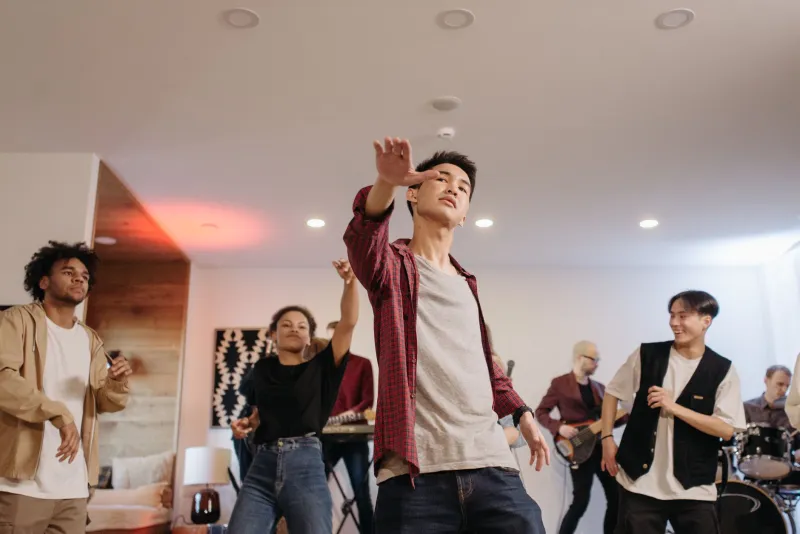
When ABBA Voyage launched in London and the virtual concert experience became a global cultural moment, Asian-American fans were among the first to organize watch parties, streaming groups, and community viewing events across the US. Cities like Los Angeles, Houston, and New York saw ABBA-themed gatherings that drew heavily from Asian-American social networks.
Being early to something culturally significant matters in tight-knit communities. Asian-American ABBA fans didn't feel like they were catching up to a trend — they felt like they were part of something happening in real time.
5. Broadway Brought It Home
The Broadway run of Mamma Mia! had significant staying power in cities with large Asian-American populations, and the musical became a staple of high school and community theater productions across the country. For many second-generation Asian-Americans, performing ABBA songs in a school production was their first deep personal connection to the catalog.
"I played Sophie in my high school's Mamma Mia! production," shared one fan from our community in the Bay Area. "Learning those songs inside and out, understanding the emotional architecture of them — I've never stopped listening to ABBA since."
6. The Intergenerational Bridge Factor Is Real
ABBA occupies a rare position in music history: they're beloved by people who were teenagers in the 1970s and by people who are teenagers right now. For Asian-American families where generational connection can sometimes be complicated by language barriers or cultural distance, ABBA represents shared neutral ground.
Parents who immigrated from Korea, Japan, the Philippines, or Vietnam often have their own ABBA memories — the band was genuinely massive across Asia in the late 70s and early 80s. When their American-born children discover the same music, it creates a rare moment of shared cultural reference.
7. Social Media Communities Have Created Critical Mass
TikTok, Instagram, and YouTube have been essential in building visible Asian-American ABBA fan communities. Creators who blend ABBA content with Asian cultural references — think cooking videos set to "Dancing Queen" or ABBA song analysis videos with K-pop comparison commentary — have found surprisingly large audiences.
This visibility matters. When fans see themselves reflected in a fandom, they're more likely to engage deeply and publicly with it.
8. The Aesthetic Overlap With Vintage Asian Pop Culture
ABBA's visual era — the 1970s and early 80s — overlaps with a period of significant pop cultural development across Asia. The glam aesthetics, the bold color palettes, the theatrical performance styles all echo visual traditions that feel familiar to fans of vintage Japanese and Korean entertainment.
For fans who are into the retro aesthetics of City Pop or vintage K-drama, ABBA's visual world feels like a kindred spirit rather than something foreign.
9. The "Underdog Going Global" Narrative Resonates
ABBA were Swedes who conquered the English-speaking world on their own terms, singing in their second language and making no apologies for being exactly who they were. That narrative — of an outsider breaking through without erasing their identity — resonates powerfully with Asian-American audiences who see their own communities navigating similar dynamics in American cultural spaces.
10. This Community Actually Shows Up for Each Other
Maybe the most important reason of all: Asian-American ABBA fan communities are genuinely tight. The fan clubs, Discord servers, and local meetup groups that have formed around shared love of ABBA tend to be welcoming, organized, and enthusiastic in ways that make new fans feel immediately at home.
At Asia ABBA Fan Hub, we see this every single day. The comments, the shares, the community watch parties — this isn't passive fandom. It's active, joyful, and growing.
The Bigger Picture
What does it mean that Asian-American Gen Z and Millennials are leading an ABBA revival? It says something interesting about how American pop culture consumption is shifting. Fandom is no longer a monolithic thing driven by a single demographic. The most passionate fan communities are often ones that find unexpected personal meaning in an artist's work — meaning that goes beyond nostalgia or chart position.
For Asian-American ABBA fans, this music isn't a throwback. It's alive, it's relevant, and it's theirs. And honestly? The rest of American pop culture is just catching up to what this community already knew.