How Asian-American Gen Z TikTokers Turned 'Waterloo' Into 2024's Most Unexpected Earworm
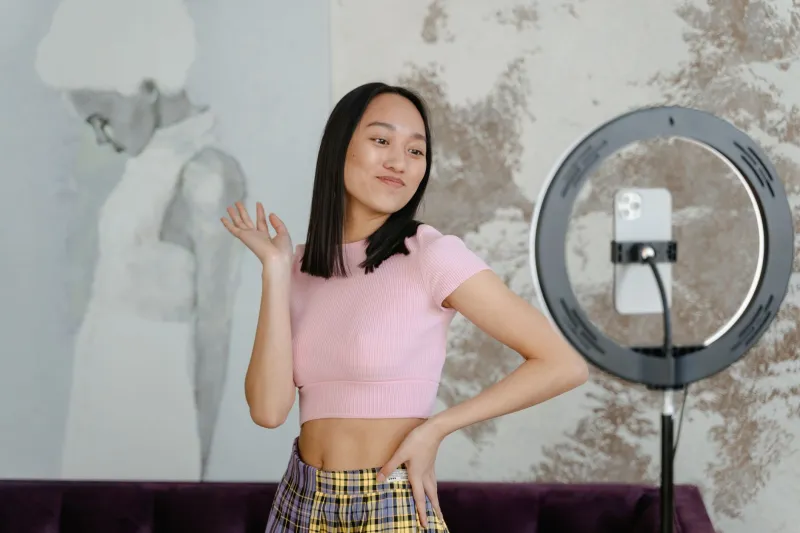
Somewhere between a boba run and a midnight study session, a nineteen-year-old in Irvine, California opened TikTok, slapped on a sequined jacket her mom had been storing since 1987, and lip-synced the entire opening verse of 'Waterloo' with the kind of committed energy that breaks the internet. Within 48 hours, the video had 2.3 million views. The comments? Mostly variations of wait, this song is actually a banger???
Welcome to the ABBA renaissance — Gen Z edition, with a distinctly Asian-American twist.
Why TikTok and ABBA Are a Match Nobody Predicted
Let's be honest: if you'd told a music industry executive five years ago that ABBA would become a recurring fixture on a platform built for 15-second trends and Gen Alpha dance challenges, they would have laughed you out of the room. And yet here we are.
The reason isn't hard to understand once you actually look at what ABBA does well. Their production is enormous — wall-of-sound arrangements, crystalline vocal harmonies, and melodies so immediately satisfying they practically beg you to react. TikTok's format rewards exactly those qualities. You have maybe three seconds to hook a viewer before they swipe. ABBA's intros don't waste a single beat. 'Voulez-Vous' drops you into the groove before your thumb even gets curious. 'Gimme! Gimme! Gimme!' has one of the most recognizable four-bar openings in pop history.
Then there's the theatrical dimension. ABBA was always as much a visual act as a sonic one — the platform boots, the satin jumpsuits, the choreography that was equal parts disco and drama. TikTok is fundamentally a visual-first space. The music doesn't just play in the background; it becomes a costume, a character, a whole vibe. Asian-American creators, many of whom grew up code-switching between cultures and know intimately how to perform identity, have figured out how to make that theatricality feel fresh rather than nostalgic.
The Creators Leading the Charge
Take the 'Waterloo' transition trend that exploded earlier this year. The format was simple: creator starts in everyday clothes, looking decidedly unimpressive, then the song's chorus kicks in and they're suddenly fully glammed — sparkly, confident, completely transformed. Dozens of Asian-American creators ran with it, many adding a specific cultural layer: the 'before' look was often traditional or understated (think an auntie's housedress or a CNY outfit that felt 'too much' for American school), while the 'after' was unapologetically bold.
The subtext wasn't subtle, and it didn't need to be. This is what Gen Z does: they use pop music as shorthand for bigger conversations about identity, belonging, and self-expression. The fact that ABBA — a group from Sweden, beloved by immigrant grandparents across Asia — became the vehicle for that conversation says something genuinely interesting about how cultural memory travels.
Creators like @mango.melodies (Vietnamese-American, based in Houston) and @boba.björn (yes, that's really the handle — Filipino-American, Los Angeles) have built substantial followings specifically around ABBA content. Their videos range from earnest covers to comedic skits to genuinely impressive dance routines set to 'Dancing Queen.' What ties them together is an insistence that loving ABBA is not embarrassing. It is not your parents' music in a dismissive sense. It is, in fact, exactly the kind of thing worth reclaiming.
Reclaiming 'Retro' as a Power Move
Here's the thing about Gen Z and nostalgia: they don't experience it the same way millennials do. For millennials, nostalgia is often tinged with a kind of wistfulness — a longing for something lost. For Gen Z, reaching back into musical history is more of a curatorial flex. You're not saying I miss this; you're saying I found this, and I'm the one who gets to decide it's cool now.
Asian-American Gen Z creators are doing something even more specific with ABBA. They're not just declaring the music cool — they're connecting it to a lineage that feels personal. Many of them grew up hearing ABBA in their parents' cars, at family karaoke nights, humming from their grandparents' old cassette players. The music was always there, ambient and warm, associated with family and comfort rather than mainstream American pop culture.
By bringing it to TikTok, they're not just introducing ABBA to new audiences — they're asserting that their cultural inheritance is worth sharing. That the things their families loved deserve a platform. That 'Mamma Mia' playing at a lunar new year party is not weird; it is, in fact, kind of perfect.
The Numbers Don't Lie
Spotify reported a notable uptick in ABBA streams among the 18-24 demographic in the US following several of these viral moments. The hashtag #ABBATikTok has accumulated hundreds of millions of views. 'Gimme! Gimme! Gimme!' — already famous for being sampled by Madonna — has been remixed, lip-synced, and danced to in formats ranging from earnest to absurdist across thousands of videos.
What's particularly striking is the geographic spread. A lot of the highest-performing ABBA content is coming from creators in cities with large Asian-American populations: the San Gabriel Valley, the Bay Area, Flushing, Koreatown. These aren't random pockets of ABBA fandom. These are communities where the music has been quietly beloved for decades, passed down through families who discovered it during immigration waves in the '70s and '80s.
Cool Doesn't Need a Disclaimer
The most radical thing these creators are doing isn't making ABBA go viral. It's refusing to apologize for loving it. There's no ironic distance, no 'this is so cringe but hear me out.' The energy is straightforward enthusiasm — the kind that's actually contagious.
And maybe that's the real lesson here. ABBA survived disco's death, outlasted the '90s, and somehow became the soundtrack to a Broadway musical empire. They don't need Gen Z to validate them. But Gen Z — specifically, young Asian-Americans who are done shrinking the parts of themselves that don't fit neatly into mainstream American pop culture — might need ABBA more than they realize.
'Waterloo' trending again isn't just a fun music story. It's a small, glittery data point in a much larger story about how identity gets inherited, remixed, and eventually, proudly claimed.
And honestly? The sequined jacket looks great.