'Dancing Queen' Costs Extra Now: How ABBA Took Over Asian-American Wedding and Party Season
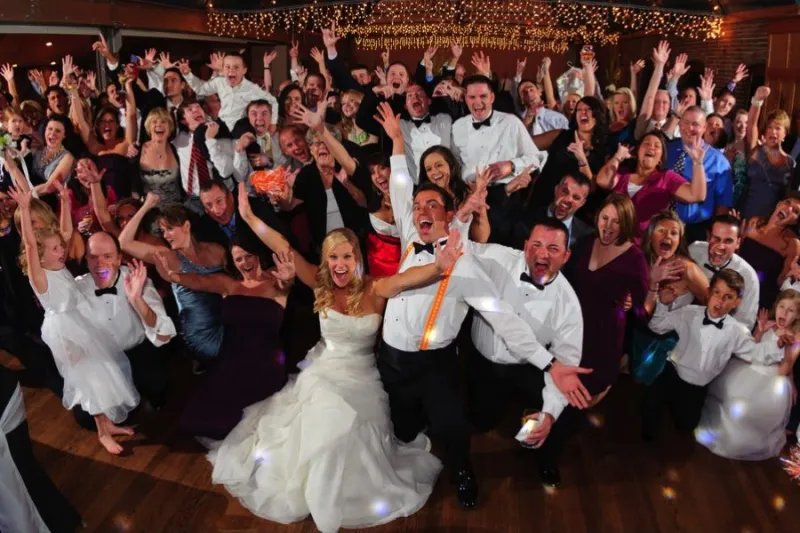
Photo: wedding reception dancefloor guests dancing celebration banquet hall, via amusicplus.com
Here's a sentence nobody expected to write in 2024: "Dancing Queen" has a surcharge.
Not officially, of course. But ask event planners, banquet hall operators, and wedding DJs working the Asian-American celebration circuit, and they'll tell you the ABBA economy is real. The band's catalog has quietly become the default party soundtrack of an entire community's biggest nights — and the industry is taking notes.
The Request That Became the Rule
A decade ago, an ABBA request at a Vietnamese engagement party or a Korean first-birthday doljanchi was a curveball. Today, planners say it's practically a line item.
"I'd estimate three out of four weddings I book now have at least one ABBA moment," says a planner who works across Southern California's Chinese and Vietnamese communities. "Usually the grand entrance. Sometimes the whole dance set. I've had couples ask for an ABBA medley instead of a traditional processional. I had to talk one bride out of walking down the aisle to 'The Winner Takes It All,' which, emotionally, would have been a lot."
DJs report a similar shift. The "Dancing Queen moment" — the engineered, phones-out, whole-room singalong — is now a deliverable that clients explicitly request. Some DJs build their entire reception arc around it. A few admit to pricing peak-season ABBA-heavy sets a tier higher, mostly because the dancefloor demand means more equipment, more lighting, more everything.
Why Swedish Disco Sells
The obvious question: why ABBA? The answer, according to the people booking these events, is that ABBA solves a problem every multicultural celebration has.
"You've got three generations in one ballroom," one banquet hall manager explains. "Grandparents who came here in the '70s and '80s — that's literally when ABBA was on the radio everywhere in Asia. Parents who grew up on the gold records. And kids who know every word because of Mamma Mia and TikTok. Find me another artist where all three of those groups get up at the same time. You can't."
That cross-generational pull is the whole business case. A party where the dancefloor empties during the older crowd's music and again during the younger crowd's is a failed party. ABBA is the bridge — joyful enough for the grandparents, ironic enough for Gen Z, and beloved enough by everyone in between to keep the floor full all night.
Fusion, Not Replacement
The opinionated part of this story is what it signals. Critics of the trend worry that Swedish pop is crowding out traditional music. The planners we spoke to push back hard on that framing.
"It's never either/or," one says. "The tea ceremony happens in the morning. The lion dance happens at the reception. And then 'Dancing Queen' hits at 9:30 and grandma is out there with the flower girl. That's not cultural loss. That's cultural addition."
There's something genuinely fitting about it, too. ABBA built its career on the idea that pop music could travel anywhere and belong to everyone — a Swedish band conquering Japan, Korea, and Southeast Asia long before streaming made global pop the norm. Asian-American families returning the favor, four decades later, feels less like an accident and more like a long-delayed reunion.
Book Early
The practical takeaway for anyone planning a celebration this season: if you want the ABBA block, tell your DJ now. Peak-season weekends are filling up, the good DJs are double-booked, and yes — the Dancing Queen premium is real.
Worth every penny.