Not Your Parents' Disco: Asian-American DJs Are Flipping ABBA Into the Future of Club Music
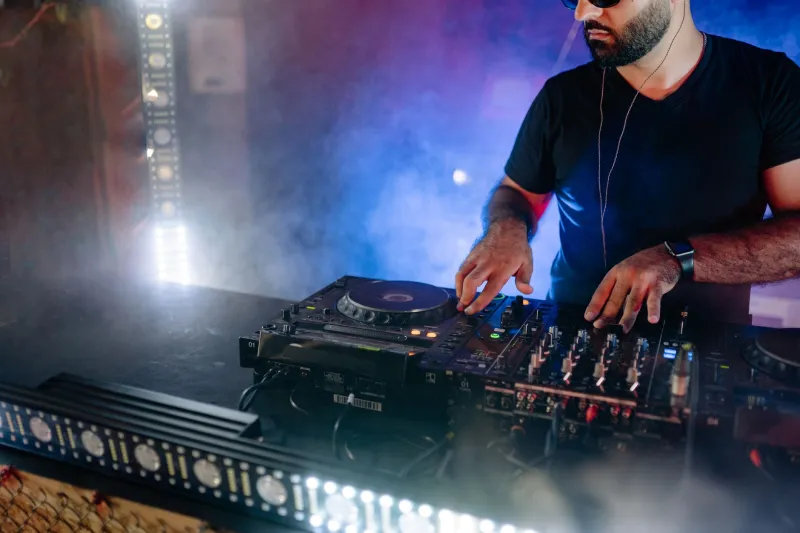
There's a moment in a good DJ set — you know the one — where the floor shifts. Something familiar sneaks into the mix, but it's been bent just enough that you feel it before you recognize it. Your body moves before your brain catches up. That's the zone DJ Kira Matsuda is chasing every weekend.
"ABBA is basically a gift to a DJ," says Matsuda, a Japanese-American producer and selector based in San Francisco who has been weaving ABBA elements into her sets for the past three years. "The harmonic structures are genuinely sophisticated. The rhythmic feel is looser than people remember — it's not rigid disco, it breathes. Once you start pulling it apart and rebuilding it, you realize how much room there is to work."
Matsuda is part of a growing cohort of Asian-American DJs and producers who are doing something more interesting than simply playing ABBA tracks or leaning into '70s nostalgia nights. They're treating the catalog as raw material — sampling chord progressions, isolating vocal runs, borrowing production philosophies — and feeding it into contemporary house, Afrobeat-influenced dance music, and experimental electronic spaces.
What ABBA Actually Sounds Like Under the Hood
To understand why ABBA works so well as a production reference, it helps to spend a minute with what Benny Andersson and Björn Ulvaeus were actually doing in the studio. Their productions — particularly from 1976's Arrival through 1980's Super Trouper — were notable for their layered vocal harmonics, unconventional chord substitutions, and a rhythm section approach that was ahead of its time in its use of space.
"People think of ABBA as pure pop candy," says Marcus Chen, a Taiwanese-American music producer in Brooklyn who has worked across dance and electronic genres. "But when you actually pull up the multitrack stems — some of which have been released or reconstructed over the years — you hear these really complex inner voicings. The bass is doing something interesting. The guitars are often doing something a jazz musician would recognize. It's dense."
Chен points specifically to the production on "The Day Before You Came" (1982) as an example of ABBA operating in a mode that anticipates a lot of what ambient and minimal electronic producers were reaching for years later. "That track is basically a proto-ambient pop record. The minimalism, the space, the way the reverb sits — it sounds more like Brian Eno than Donna Summer."
For DJs working in house and techno, that kind of structural sophistication is catnip.
The Cultural Reclamation Angle
But there's more going on here than pure sonic craft. Several of the DJs we spoke with were explicit about a cultural dimension to their ABBA work — a conscious act of reclaiming a specific kind of space.
Disco, as a genre and a club culture, has always had a complicated relationship with race and visibility. Its origins were deeply rooted in Black and Latino queer nightlife, and its eventual mainstream commercialization — and subsequent backlash, most notoriously at the 1979 Disco Demolition Night in Chicago — carried ugly undertones. ABBA, as a white European act who benefited enormously from disco's commercial peak, occupies an interesting position in that history.
For Asian-American DJs, bringing ABBA into contemporary club contexts while centering Asian-American dancefloors and audiences is its own kind of statement.
"I'm not interested in nostalgia nights where people dress up like it's 1977," says DJ and producer Sana Rhee, a Korean-American artist running events in Los Angeles. "What I'm interested in is: what does this music mean when it's playing in a room that's mostly Asian-American, mostly queer, mostly people who were never centered in the original disco narrative? It changes. The meaning shifts. That's exciting to me."
Rhee's recent event series, held quarterly at a mid-size venue in Silver Lake, has developed a devoted following precisely because of this curatorial philosophy — sets that move fluidly between K-pop production aesthetics, contemporary UK garage, and reworked ABBA structures, creating something that feels both specific and genuinely new.
Production Techniques: The ABBA Toolkit
So what does it actually look like when a producer integrates ABBA into a contemporary set or track?
Matsuda describes a few approaches she uses regularly. One is harmonic sampling — isolating a chord progression or a specific interval relationship from an ABBA track and rebuilding it in a new tempo and texture. "'Gimme! Gimme! Gimme!' is the obvious one because the riff has already been sampled to death by Madonna and everyone else," she says. "But something like 'Angeleyes' or 'Chiquitita' — those harmonic movements are really rich and almost nobody has touched them."
Another technique is tempo manipulation. ABBA's classic tracks sit in a mid-tempo zone — typically around 100-120 BPM — that doesn't map directly onto contemporary house (usually 120-130 BPM) or techno (130+). Stretching or compressing elements to fit a different tempo framework, while preserving the harmonic character, requires skill and produces results that are recognizable but transformed.
Marcus Chen talks about a different approach: studying ABBA's production philosophy rather than sampling directly. "The way Andersson approached vocal arrangement — the way he'd stack harmonies that shouldn't work on paper but do — I think about that when I'm building synth layers. It's an influence in the compositional sense, not the sampling sense."
Making Space in the Room
What unites all of these artists is a conviction that the conversation around ABBA — and around disco and pop history more broadly — doesn't have to be finished. The canon isn't closed. New communities bring new ears and new contexts, and what those ears hear in a 45-year-old recording is genuinely different from what a white American critic heard in 1979.
"Every generation gets to rediscover music on its own terms," says Sana Rhee. "Asian-Americans are doing that with ABBA right now, and we're doing it in clubs and on dancefloors, which is where music is supposed to live anyway. That feels right to me."
The next time you're on a dancefloor and something familiar flickers through the mix — something that makes your body move before your brain catches up — pay attention. It might be older than you think. And it might be heading somewhere completely new.